
A Patient Guide to Estate Cleanouts in Norfolk
Clearing out a family home is rarely simple. Here's a slower, more honest walkthrough of how estate cleanouts actually go in the Norfolk area.
ReadRoofing guide
Roofing debris is heavier and more awkward than people expect. Here's how to size and place a dumpster for a Norfolk-area roof tear-off without surprises.
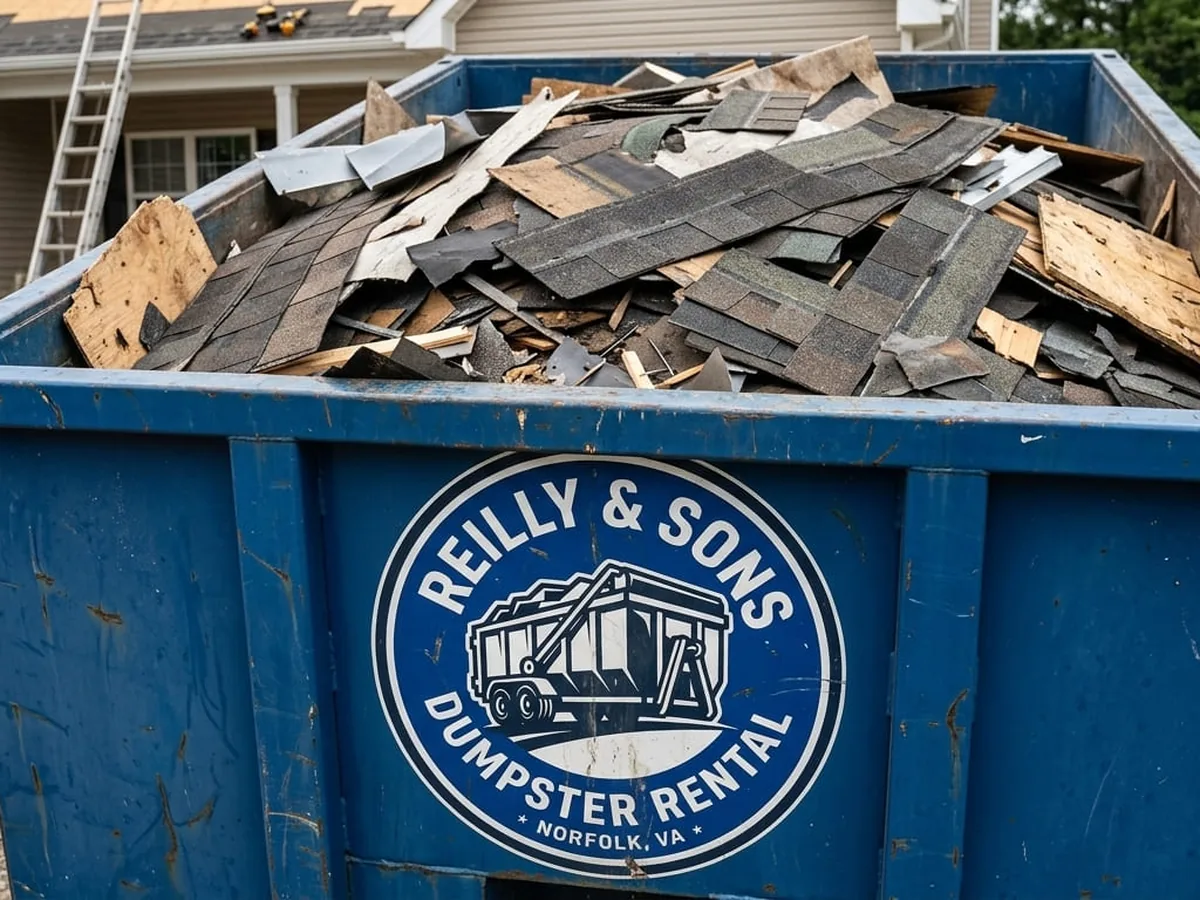
A roof tear-off generates more debris, and heavier debris, than almost any other residential project we haul for. Old asphalt shingles, felt paper, flashing, and sometimes a layer or two of previous roofing underneath all comes off fast once a crew gets going, and it has to land somewhere. Get the dumpster size or placement wrong and you can stall a roofing crew mid-day, which costs everyone money. Here's what actually matters when you're planning a roof replacement dumpster in Norfolk, Virginia Beach, Chesapeake, or anywhere else on the Southside or the Peninsula.
Shingles are dense. A single square of three-tab asphalt shingles (100 square feet of roof) can weigh 200 to 300 pounds once it's torn off and stacked, and older homes around Norfolk, especially in neighborhoods like Ghent, Larchmont, and Colonial Place, sometimes have two or even three layers of shingles stacked from past re-roofs that were never stripped down to the deck. That means weight adds up quickly relative to the volume it takes up in a dumpster. This is the single biggest mistake homeowners and even some contractors make when self-ordering a container: they size for volume like it's household junk, when the real constraint is the dumpster's weight limit, not how full it looks.
Container weight limits (tonnage included) matter more than the yardage number here. As a rough planning guide for asphalt shingle tear-offs:
If you're not sure which category your project falls into, tell us the approximate roof square footage and how many layers are coming off, and we'll help size it instead of guessing. It's a five-minute conversation that saves a same-day upsize call.
Roofing tear-offs are messy in a way that regular junk removal isn't — nails, granules, and torn felt paper end up on the ground around the dumpster no matter how careful the crew is. A few placement notes specific to roofing work:
Coastal Virginia's hurricane season runs roughly June through November, and a lot of roof replacements in this area get scheduled because of actual wind damage from a named storm or a strong nor'easter, not just age. If you're replacing a roof after storm damage, a few things to keep in mind:
Asphalt shingles, felt/tar paper, wood decking, and flashing can all go in the same roofing dumpster. A few things that commonly get roofing jobs held up:
The best results come from coordinating delivery and pickup directly with your roofer's schedule rather than guessing. Most tear-offs and reroofs on a typical single-family home happen in a single day, so a dumpster that arrives the morning of and gets picked up the next day is usually the right rhythm — no need to pay for a container sitting empty for a week beforehand. If your roofer is doing a multi-day job (a large or complex roof, or a crew working around weather), let us know so we can plan the pickup around actual completion instead of a fixed date.
Talk to a real person
Call (757) 290-7723 and describe the job. Flat price, stated tonnage allowance, and a delivery window on the same call.
Mon–Sat 7:00am – 7:00pm
From this guide
It depends more on tonnage than volume. A single-layer asphalt roof under about 2,000 square feet often fits a 10-15 yard container; a larger roof or a multi-layer tear-off usually calls for a 20 yard. Tell us the square footage and number of layers and we'll size it correctly rather than guessing.
If the dumpster sits entirely on your own driveway or private property, a City of Norfolk permit typically isn't required. If it has to sit in the street or on the public right-of-way, a permit through the City of Norfolk is required. Ask us when you book and we'll walk you through it.
Yes, roofing shingles, felt paper, and the nails that come with them are standard debris for a roll-off dumpster. Just flag heavier or multi-layer tear-offs ahead of time so the right size and weight allowance gets booked.
Talk to your adjuster before the tear-off starts about whether they need to see or photograph the damaged material. Once shingles and decking go into the dumpster and get hauled away, that evidence is gone, so it's worth confirming timing first.
Keep reading
Clearing out a family home is rarely simple. Here's a slower, more honest walkthrough of how estate cleanouts actually go in the Norfolk area.
ReadFrom a garage cleanout to a full home renovation, here's how the five common dumpster sizes actually compare, with real examples from around Hampton Roads.
ReadA loaded roll-off dumpster is heavy. Here's how placement and simple protection steps keep your driveway, lawn, and property in good shape.
Read