Dumpster Placement and Driveway Protection: What to Know Before Delivery
A loaded roll-off dumpster is heavy. Here's how placement and simple protection steps keep your driveway, lawn, and property in good shape.
ReadSizing guide
From a garage cleanout to a full home renovation, here's how the five common dumpster sizes actually compare, with real examples from around Hampton Roads.
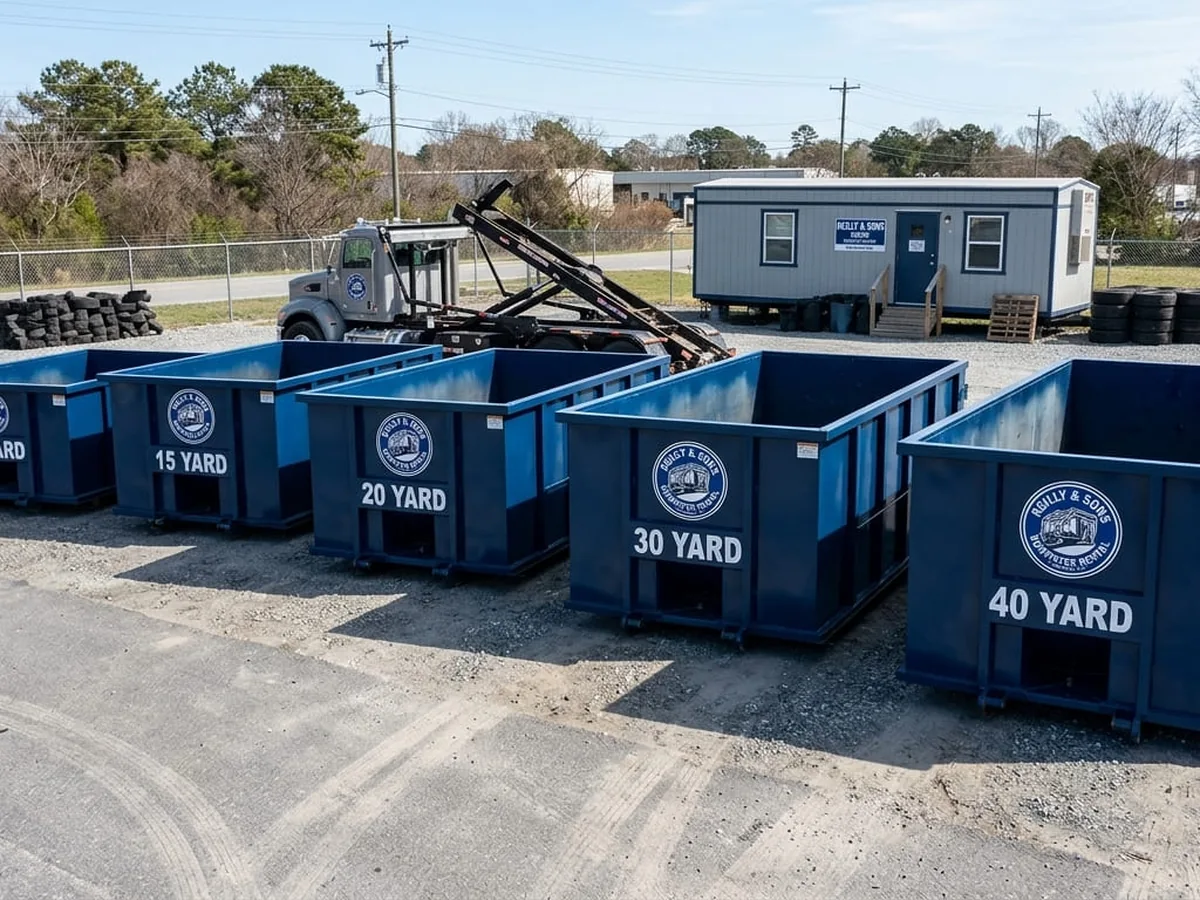
Picking a dumpster size is the single most common question we field, and it's understandable — most people rent a roll-off dumpster once every few years, if that, and the size names alone (10 yard, 20 yard, 30 yard) don't mean much without context. This guide breaks down all five common sizes with real project examples from around Norfolk, Virginia Beach, Chesapeake, and the rest of the Southside and Peninsula, so you can size it correctly the first time instead of paying for a swap or an overage.
A 10 yard dumpster is roughly the size of a small pickup truck bed times three or four — it's the smallest roll-off size we offer and it's built for jobs where space is limited or the volume of debris is genuinely small. Typical uses:
It's also the size that fits most comfortably on narrow driveways, which matters in older neighborhoods like Ghent, Park Place, and Colonial Place where driveway space is tight and street parking is often the only alternative.
The 15 yard sits between the 10 and 20 and is a good fit when a project is a little too big for the smallest container but doesn't need the footprint of a 20. Common uses:
If you're between a 10 and a 20 and not sure which way to round, the 15 is often the more efficient call rather than paying for extra room in a 20 you won't use.
The 20 yard is the size we deliver most often, because it covers the widest range of mid-sized residential and light commercial projects. Real examples:
It's a good middle-ground size: large enough to avoid running out of room mid-project, but still small enough to fit on most residential driveways around Norfolk and its neighborhoods.
Once a project moves into whole-home territory or generates a lot of bulky material, the 30 yard becomes the practical choice. Examples:
The tradeoff is footprint — a 30 yard needs meaningfully more space than a 20, so it's worth confirming your driveway or yard can accommodate it, especially in denser neighborhoods on the Southside.
The 40 yard is reserved for the biggest jobs — large-scale demolition, commercial cleanouts, or major construction projects generating high volumes of bulky, lightweight debris. Examples:
Because of its size, a 40 yard generally isn't practical for a typical residential driveway — it's most often used on commercial sites or larger properties with room to spare.
Every container has a tonnage allowance included, and heavier materials — concrete, brick, dirt, roofing shingles, wet debris — can hit that weight limit long before the dumpster looks full. This is why a job involving concrete or roofing almost always calls for a smaller container than the volume alone would suggest; the roll-off will hit its weight limit while still looking half-empty. If your project involves anything dense, tell us up front so we can size around tonnage, not just yardage.
| Size | Best for | Typical driveway fit |
|---|---|---|
| 10 yard | Small cleanouts, single-room remodels | Fits most driveways |
| 15 yard | Mid-small renovations, yard waste | Fits most driveways |
| 20 yard | Kitchen/bath remodels, roofing, estate cleanouts | Fits most driveways |
| 30 yard | Whole-home renovations, large cleanouts | Needs more space |
| 40 yard | Commercial, large-scale demolition | Best for larger properties |
Honestly, the fastest way to get the right size is to skip guessing altogether and just describe the project — what's being removed, roughly how much of it, and where the dumpster needs to sit. We size these every day and would rather talk it through up front than have a container show up too small or too large for what you're actually doing.
Talk to a real person
Call (757) 290-7723 and describe the job. Flat price, stated tonnage allowance, and a delivery window on the same call.
Mon–Sat 7:00am – 7:00pm
From this guide
The 20 yard dumpster is the most frequently rented size because it covers the widest range of mid-sized residential projects, from kitchen remodels to roofing tear-offs to estate cleanouts.
Think about scope: a single room, a garage, or a small yard cleanup usually fits a 10 yard. A whole-house project, a full remodel, or a roofing job usually needs a 20 yard. If you're unsure, describe the project and we'll help size it.
Weight, not just volume. Dense materials like concrete, roofing shingles, or dirt can hit a dumpster's included weight limit while it still looks far from full, so heavy-material jobs often need a different size than the visual volume would suggest.
Yes. A 10, 15, or 20 yard dumpster fits most residential driveways in Norfolk and surrounding neighborhoods, while 30 and 40 yard containers need noticeably more space. Confirm your driveway width when booking a larger size.
Keep reading
A loaded roll-off dumpster is heavy. Here's how placement and simple protection steps keep your driveway, lawn, and property in good shape.
ReadA PCS timeline doesn't bend for a garage sale. Here's how a dumpster rental fits into a military move-out near Naval Station Norfolk and Little Creek.
ReadA straight answer on dumpster pricing in the Norfolk area, what pushes the price up or down, and how to avoid surprise fees.
Read