Roof Replacement Checklist: Getting the Dumpster Right in Norfolk
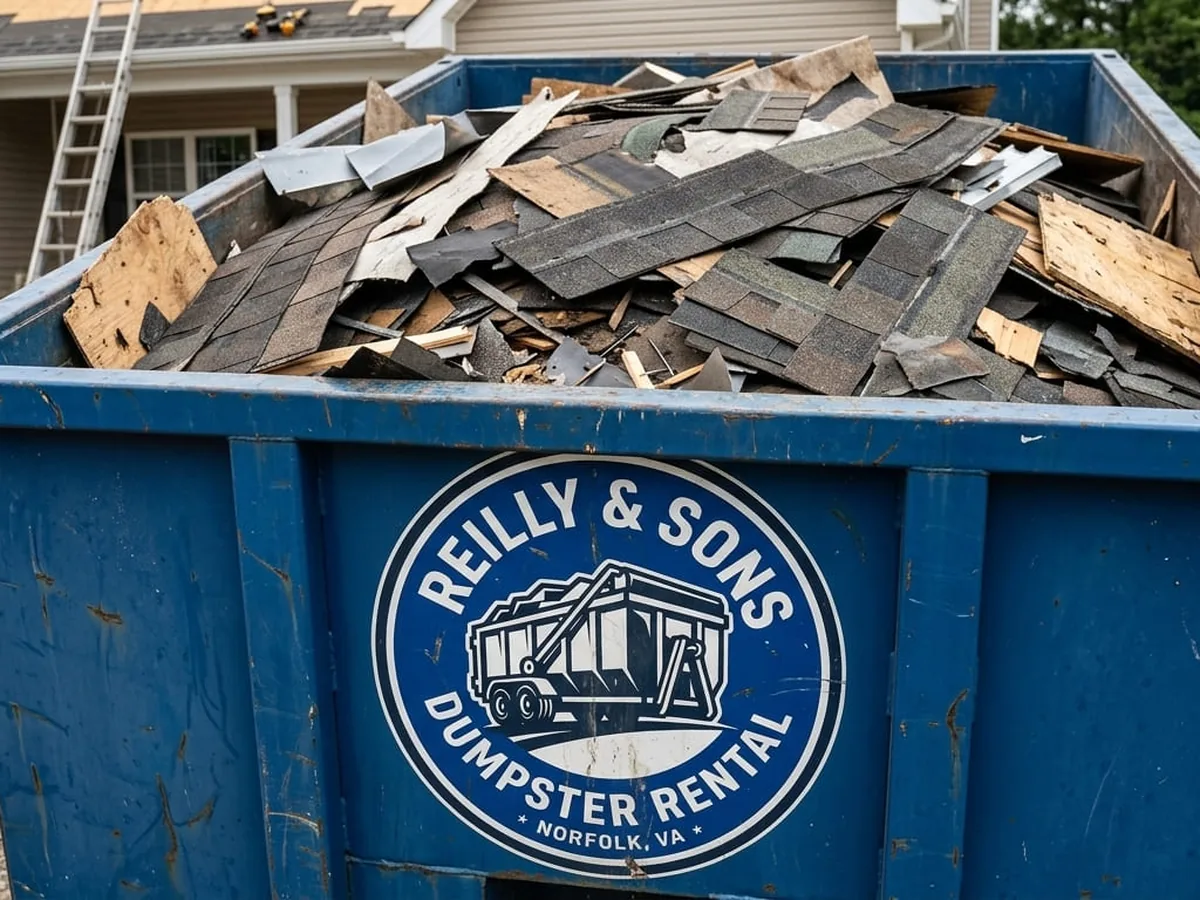
Roofing debris is heavier and more awkward than people expect. Here's how to size and place a dumpster for a Norfolk-area roof tear-off without surprises.
ReadConstruction guide
New construction doesn't generate one kind of debris — it generates a different kind at every phase. Here's how to size a dumpster for each stage.
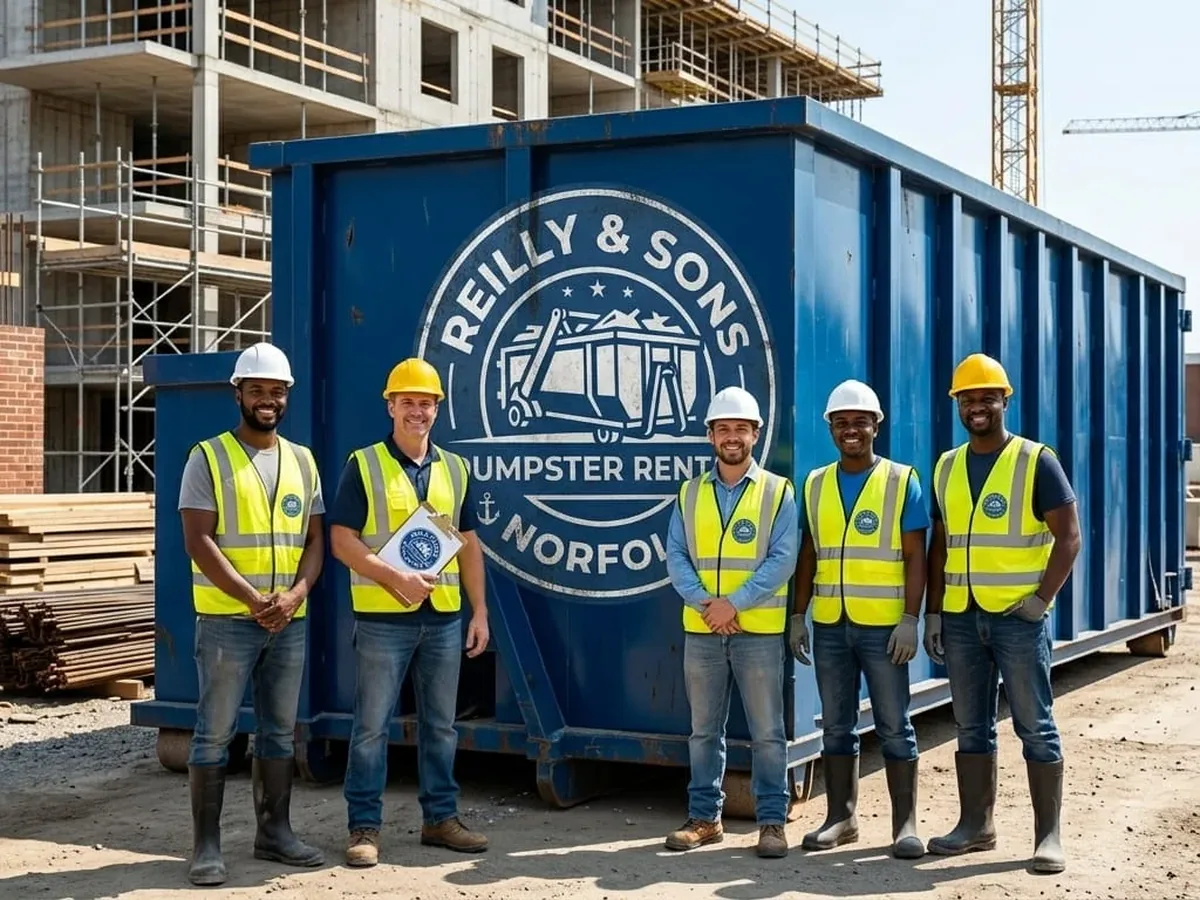
A new build generates a completely different kind of debris depending on what phase you're in, and treating the whole project as one dumpster need is how a lot of builders and general contractors end up either paying for a container that's too big too early, or running out of capacity right when they need it most. Matching container size to the actual phase of work keeps the job site clear without overpaying.
If the lot needs clearing, grading, or an existing structure removed before anything new goes up, this phase produces dense, heavy debris — tree stumps, root balls, old concrete, and demolition material from any existing structure. This is a weight-driven phase, not a volume-driven one.
Framing debris is mostly lumber offcuts, packaging, and sheathing scraps — lighter and bulkier than site-prep debris, meaning volume matters more than weight at this stage.
Roofing debris on new construction is similar to a tear-off on an existing home — shingles, underlayment, and flashing scrap, all fairly dense.
Drywall scrap is deceptively heavy for its volume, and this phase also generates electrical, plumbing, and HVAC packaging waste.
The last phase before a certificate of occupancy usually means flooring scraps, trim offcuts, packaging from fixtures and appliances, and general site cleanup debris — lighter and more mixed than any earlier phase.
Once the structure is finished, many new builds still have a landscaping and grading phase — clearing construction debris that got buried or pushed to the edge of the lot during earlier work, plus scrap sod, packaging from plantings, and leftover hardscape material. It's easy to forget this debris exists until the punch list is nearly done, but it's worth planning a final container or a smaller add-on haul for it rather than leaving the lot half-finished after the house itself is done.
On longer projects, a lot of builders find it more efficient to schedule a swap — hauling away a full container and dropping an empty one — timed to phase transitions rather than trying to stretch one dumpster across site prep through finish work. This keeps the job site walkable and avoids debris piling up around an already-full container while waiting for a scheduled pickup date.
New construction lots around Norfolk and the Southside vary a lot in access. Infill lots in older neighborhoods like Berkley or Lafayette-Winona can have tight street frontage, while newer development in Chesapeake or Virginia Beach often has more room to work with. If the container needs to sit in a street or public right-of-way rather than on the lot itself, check our Norfolk permit guide before delivery day. And if the build is on a tight schedule tied to inspections or closing dates, our same-day dumpster rental option can help avoid a stalled phase.
Every build is different, and a rough framing timeline plus expected phases is usually enough for us to recommend a size and swap schedule that keeps the site clear without paying for capacity you don't need yet. Call (757) 290-7723 to talk through your project, or see our construction dumpster rental page for more detail.
Talk to a real person
Call (757) 290-7723 and describe the job. Flat price, stated tonnage allowance, and a delivery window on the same call.
Mon–Sat 7:00am – 7:00pm
From this guide
Not necessarily a different size every time, but matching the container to what each phase actually produces saves money. Site prep and demolition are weight-heavy, framing is bulky but lighter, and finish work is light and mixed — sizing for each phase avoids overpaying or running out of capacity.
Most single-family new construction works well with a 20-yard dumpster for the bulk of the project, stepping up to a 30-yard or 40-yard for site prep and demolition, and down to a 10- or 15-yard for final cleanup.
Yes, and on longer projects this is usually more efficient than trying to stretch one container across the entire build. Scheduling a swap at each phase transition keeps the site clear and avoids debris piling up around a full container.
Only if the container has to sit in a public street or right-of-way rather than on the lot itself. Tight infill lots in older neighborhoods are the most common case where this comes up — check with the City of Norfolk if there's any question.
Keep reading
Roofing debris is heavier and more awkward than people expect. Here's how to size and place a dumpster for a Norfolk-area roof tear-off without surprises.
ReadClearing out a family home is rarely simple. Here's a slower, more honest walkthrough of how estate cleanouts actually go in the Norfolk area.
ReadFrom a garage cleanout to a full home renovation, here's how the five common dumpster sizes actually compare, with real examples from around Hampton Roads.
Read